Replacing the spreadsheet your whole team edits at once
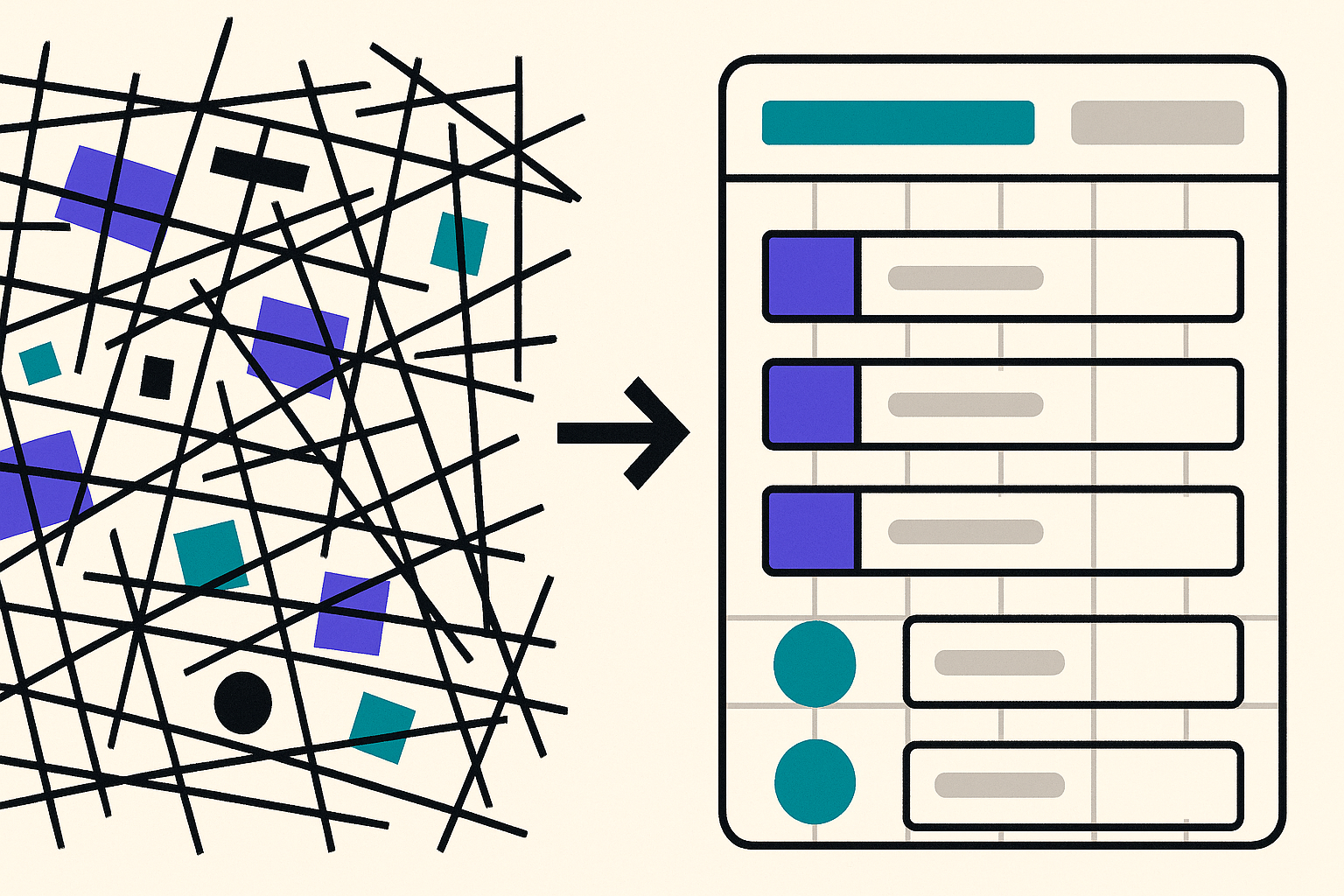
The spreadsheet that ran everything
Most small businesses we meet have one: a spreadsheet that started simple and quietly became the system of record. Orders, stock, who-does-what, all in one file that several people open at the same time. It works until someone sorts a column and breaks every row beneath it.
If that sounds familiar, you do not need a year-long IT project. You need the same process, made reliable. That is squarely a no-code job.
What actually breaks
- No record of who changed what, or when.
- No rules, so any cell can hold anything.
- Two people editing the same row at once.
- No way to give one person a narrow view without showing them everything.
These are not spreadsheet quirks. They are the absence of an application. The data is fine; the container is wrong.
The swap
We move the data into a structured back end, add roles so each person sees only what they should, and put a plain interface on top. The workflow stays the same on purpose. People should recognise their process on day one, not relearn it.
Built this way, an internal tool to replace a shared spreadsheet usually starts in the lower internal-tools range and ships in two to four weeks. You can edit it yourself afterwards, which is the part that keeps you from depending on us.
When we say keep the spreadsheet
If the file is a personal scratchpad, or it changes shape every week, an app would just slow you down. We will tell you to keep the spreadsheet and save your money. A fit check that always ends in a build is not a fit check.